Shabbat creates a sacred pause at the end of a busy week. As Friday evening approaches, daily work slows down. Families gather, candles glow, and the home begins to feel calmer.
Traditional Shabbat blessings help welcome this weekly day of rest. Each prayer connects an ordinary action with a deeper spiritual meaning. Candle lighting welcomes peace, while Kiddush honours the holiness of Shabbat. In addition, HaMotzi expresses gratitude for bread and daily provision.
For many families, these rituals also create valuable time together. Phones become quieter, work can wait, and shared meals receive more attention. Therefore, Shabbat is not only about stopping activity. It is also about returning to faith, family, gratitude, and presence.
Customs may differ between Jewish communities and households. However, the central purpose remains the same: to welcome Shabbat with holiness, peace, and joy.
“Shabbat invites the heart to stop rushing and notice the holiness already present.”
What Are Shabbat Blessings? ✨
Shabbat blessings are Hebrew prayers recited during the Jewish Sabbath. They help separate sacred time from the regular working week.
Each blessing supports a different part of the Shabbat experience. For example, candles introduce light and peace. Kiddush sanctifies the day over wine or grape juice. Meanwhile, HaMotzi gives thanks for bread.
Common Shabbat traditions include:
- 🕯️ Lighting candles before sunset
- 💖 Blessing children and loved ones
- 🎵 Singing traditional Shabbat songs
- 🍷 Reciting Kiddush over wine or grape juice
- 🍞 Saying HaMotzi over challah
- 🙏 Giving thanks after the meal
- 🌿 Closing Shabbat with Havdalah
These rituals involve several senses. Families see the candlelight, hear prayers, taste challah, and smell fragrant food. As a result, Shabbat can feel both spiritual and deeply personal.
A family does not need to perform every tradition perfectly. Instead, each practice can be learned slowly and respectfully.
When Does Shabbat Begin?
Shabbat begins on Friday evening before sunset. It continues until nightfall on Saturday.
Because sunset changes by location and season, candle-lighting times also change. Therefore, families usually check the correct local time each week.
Candles should be prepared before Shabbat begins. Many households light two candles. These may represent the two biblical ideas of remembering and observing Shabbat.
However, customs vary. Some families light one candle, while others add a candle for each child.
The number matters less than the intention behind the ritual. Candle lighting welcomes peace, sacred time, and spiritual rest into the home.
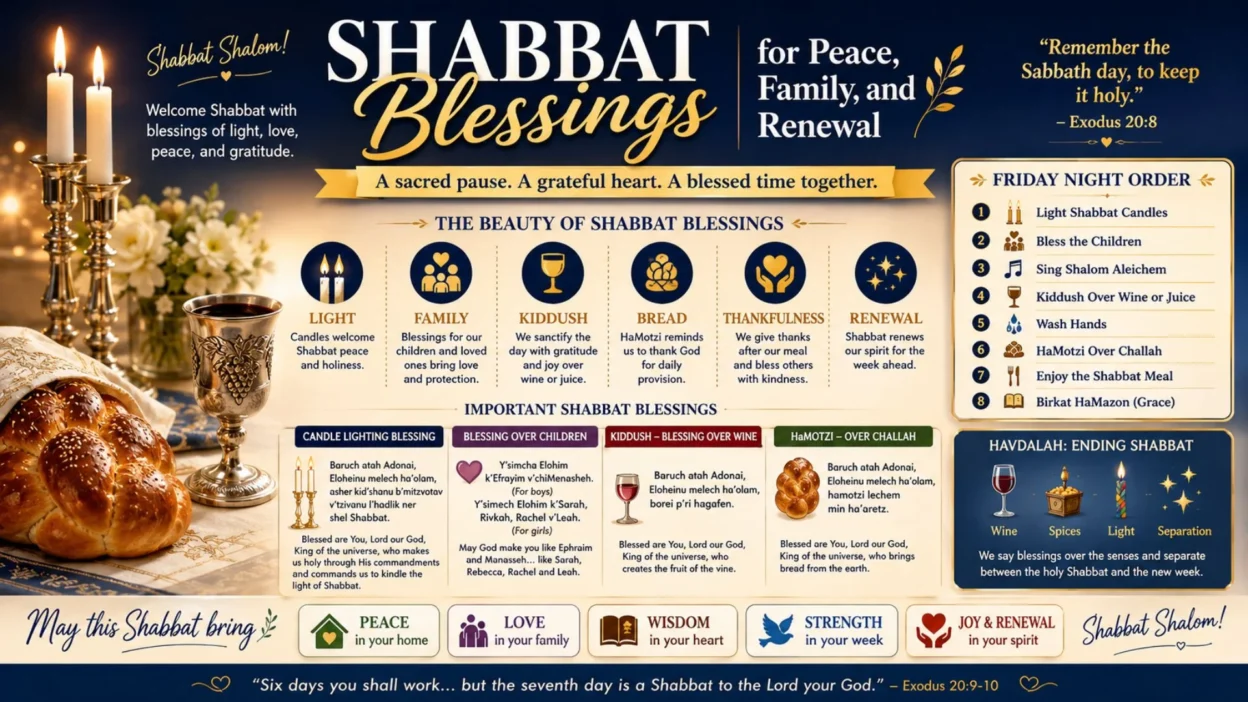
Traditional Friday-Night Shabbat Order 🕯️
A common Friday-night routine may include several meaningful practices.
First, the Shabbat candles are lit. Next, parents may bless their children. Some families then sing Shalom Aleichem or another welcoming song.
Afterward, Kiddush is recited over wine or grape juice. The family may then wash their hands before saying HaMotzi over challah.
Finally, everyone shares the Shabbat meal. Songs, Torah discussion, stories, and personal prayers may also become part of the evening.
A common order includes:
- Candle lighting
- Blessing the children
- Welcoming songs
- Kiddush
- Hand washing
- HaMotzi
- Shabbat dinner
- Grace after meals
Still, no two homes look exactly alike. Therefore, families often follow the customs of their community, synagogue, or relatives.
Shabbat Candle-Lighting Blessing 🕯️
Candle lighting marks the beginning of Shabbat. The flames bring warmth into the room and help create a peaceful atmosphere.
In many Ashkenazi homes, the candles are lit first. Then, the person lighting them covers their eyes and recites the blessing.
Some Sephardi communities say the blessing before lighting. Because practices vary, it is helpful to follow your family or community tradition.
Hebrew Transliteration
Baruch atah Adonai, Eloheinu melech ha’olam, asher kid’shanu b’mitzvotav v’tzivanu l’hadlik ner shel Shabbat.
English Meaning
Blessed are You, Eternal our God, Ruler of the universe, who makes us holy through the commandments and instructs us to kindle the Shabbat light.
After reciting the traditional blessing, many people add a personal prayer.
Personal Prayer After Lighting
Eternal God, let this light bring peace into our home.
Calm the worries we carried through the week. In addition, help us release work that can wait.
Bring healing to anyone who feels hurt. Comfort those who feel lonely or afraid.
Fill our home with patience, gratitude, kindness, and understanding.
Let the peace of Shabbat remain with us.
Amen.
The Meaning of Shabbat Candles
Shabbat candles provide physical light. However, they also carry deeper meaning.
The flames can represent peace within the home. Moreover, they remind families that sacred time has begun.
For some people, the week ends with unfinished tasks. Others may carry stress from work, school, health, or relationships.
Candlelight does not remove every problem. Instead, it creates a quiet invitation to pause.
Shabbat candles may represent:
- Peace after a demanding week
- Hope during uncertainty
- Warmth between family members
- The holiness of sacred time
- Gratitude for life and community
- A break from ordinary pressure
As the candles glow, the home begins to feel different. The week has ended, and Shabbat has arrived.
Blessing Children on Shabbat 💖
Many parents bless their children on Friday night. This blessing often takes place after candle lighting and before Kiddush.
A parent may place one or both hands on the child’s head. Then, traditional words or a personal blessing may be spoken.
Traditional Blessing for Boys
Y’simcha Elohim k’Efrayim v’chiMenasheh.
May God make you like Ephraim and Manasseh.
Traditional Blessing for Girls
Y’simech Elohim k’Sarah, Rivkah, Rachel v’Leah.
May God make you like Sarah, Rebecca, Rachel, and Leah.
Some families use inclusive wording for every child. Others continue the blessing with words based on Numbers 6:24–26.
The blessing asks God to protect the child, show grace, and give peace.
Personal Shabbat Blessing for Children
May you grow in wisdom and remain kind.
Let courage guide you when life feels difficult. At the same time, may humility help you continue learning.
May trustworthy people surround you.
When you make mistakes, may you find the strength to correct them.
Above all, always remember that you are deeply loved.
Shabbat Blessing for a Spouse 💞
Shabbat also creates an opportunity to express gratitude toward a spouse or partner.
Busy routines can make appreciation easy to forget. Therefore, a few sincere words may bring warmth to the evening.
You can say:
May this Shabbat bring rest to your body and calm to your mind.
Thank you for everything you carried this week.
May our home grow stronger through patience, honesty, and forgiveness.
Let love guide our words, especially when we disagree.
May we continue supporting one another through every joyful and difficult season.
Shabbat Blessing for Loved Ones 🌸
A blessing can also be spoken over parents, siblings, friends, or guests.
May peace settle over your heart tonight.
Let the stress of the week become lighter.
May you feel valued, supported, and welcomed at this table.
When the coming week begins, may wisdom guide your choices.
Finally, may Shabbat renew your strength and restore your hope.
Shalom Aleichem: Welcoming Peace
Many Jewish families sing Shalom Aleichem before Kiddush.
The title means “Peace be upon you.” The song welcomes the angels of Shabbat and asks them to enter in peace.
Although melodies differ, the central message remains gentle and hopeful.
Peace is welcomed into the home. Blessing is requested for the family. Afterward, the angels are sent onward in peace.
Even when someone does not know every verse, the main idea remains meaningful:
May peace enter this home and remain with everyone inside it.
Kiddush: Blessing Over Wine 🍷
Kiddush means sanctification.
The Friday-night Kiddush declares Shabbat holy over a cup of wine or grape juice. It also remembers creation and the gift of sacred rest.
The complete Kiddush contains more than the short wine blessing. However, the blessing over the fruit of the vine forms an important part.
Hebrew Transliteration
Baruch atah Adonai, Eloheinu melech ha’olam, borei p’ri hagafen.
English Meaning
Blessed are You, Eternal our God, Ruler of the universe, who creates the fruit of the vine.
During Kiddush, the cup is often lifted. After the blessing, the leader drinks and may share the wine or grape juice.
The Meaning of Kiddush
Kiddush reminds us that time can become sacred.
During the week, time often revolves around appointments, deadlines, and tasks. Shabbat, however, gives time a different purpose.
Instead of asking how much was completed, Shabbat asks whether people were truly present.
Kiddush encourages gratitude for:
- Creation
- Freedom from constant work
- Family and community
- Sacred rest
- Spiritual identity
- Joy and celebration
The cup adds beauty to the ritual. More importantly, Kiddush reminds everyone that Shabbat is different from ordinary time.
HaMotzi: Blessing Over Challah 🍞
Before eating challah, families recite HaMotzi.
The challah may remain covered during Kiddush. Afterward, it is uncovered before the bread blessing.
Customs differ regarding hand washing, salting, slicing, or tearing the challah. Therefore, households may follow different traditions.
Hebrew Transliteration
Baruch atah Adonai, Eloheinu melech ha’olam, hamotzi lechem min ha’aretz.
English Meaning
Blessed are You, Eternal our God, Ruler of the universe, who brings bread from the earth.
After the blessing, challah is shared with everyone at the table.
The Meaning of Challah
Challah represents nourishment, gratitude, community, and provision.
Bread reaches the table through many stages. Seeds are planted, crops grow, and grain is gathered. Later, ingredients are prepared and baked.
Therefore, HaMotzi honours both divine provision and human effort.
Sharing challah can remind families that:
- Food should never be taken for granted
- People facing hunger deserve support
- Shared meals strengthen relationships
- Gratitude can make simple food meaningful
- Provision carries a responsibility to share
A Shabbat table does not need expensive food. Instead, kindness, welcome, and gratitude create its deepest beauty.
Shabbat Dinner Blessing for Family 🏡
Eternal God, thank You for bringing us together.
Bless this food and everyone who prepared it.
Help us speak kindly during this meal. Moreover, teach us to listen with patience.
We remember loved ones who cannot join us tonight.
Comfort anyone facing illness, grief, loneliness, or fear.
Provide food for those who are hungry and shelter for those without a safe home.
May this Shabbat restore our energy and deepen our gratitude.
Amen.
Shabbat Blessing for Peace 🕊️
May this Shabbat bring peace after a demanding week.
Let anger soften before it becomes harmful speech.
May family members listen without rushing to judge.
Bring wisdom to people facing conflict. In addition, guide communities toward justice, safety, and dignity.
May peace begin inside our hearts.
Then, let it grow through our words, decisions, and actions.
Shabbat Blessing for Healing 🌿
May this Shabbat bring comfort to everyone who feels unwell.
Give strength to patients, caregivers, and families.
Guide doctors, nurses, therapists, and medical teams with wisdom.
For those carrying emotional pain, may compassionate support become available.
Healing may take time. However, hope can remain present throughout the journey.
May every person receive care without shame.
Shabbat Blessing for Someone Grieving 🌙
May Shabbat hold you gently during this season of grief.
You do not need to hide your sadness.
May memories bring comfort, even when they also bring tears.
Let supportive people know when to speak and when to sit quietly.
May the memory of your loved one remain a blessing.
Over time, may peace return slowly and honestly.
Shabbat Blessing for Guests 💛
May everyone entering this home feel welcomed.
No guest should worry about knowing every prayer or melody.
Let questions receive patient answers.
Shabbat blessings May differences be treated with respect.
Share food generously and conversation kindly.
Above all, may this table become a place of warmth and belonging.
Short Shabbat Blessings to Share 💌
- 💌 Shabbat shalom. May peace and warmth fill your home.
- 🕯️ Let the candlelight calm every worried thought.
- 🍷 May Kiddush bring holiness and joy to your evening.
- 🍞 May your table hold nourishment, gratitude, and friendship.
- 💖 Wishing your family patience, unity, and loving conversation.
- 🌿 May sacred rest renew your body and spirit.
- ⭐ Let wisdom guide you throughout the coming week.
- 🕊️ Peace be present in every room of your home.
- 🌸 May lonely hearts find welcome and companionship.
- 🙏 Let every prayer rise from a sincere heart.
- 🌅 May Shabbat remind you that rest also has purpose.
- 🏡 Wishing your home learning, laughter, and lasting peace.
- 💛 May gratitude replace the stress of the week.
- 🌙 Let quiet moments bring comfort and spiritual renewal.
- ✨ May the holiness of Shabbat remain with you.
Birkat HaMazon: Blessings After the Meal 🙏
Birkat HaMazon is the traditional grace recited after eating a meal that includes bread.
The complete prayer contains several blessings. These express gratitude for food, the land, Jerusalem, divine goodness, and continued provision.
Some families recite the full traditional form. Meanwhile, others may use a shorter version according to their community practice.
A simple personal prayer may say:
Thank You for this meal and for the people gathered here.
Help us remember those who do not have enough food.
May the strength we receive support acts of justice, generosity, and kindness.
Amen.
Shabbat Morning Blessing ☀️
shabbat blessings Saturday morning may include synagogue services, Torah reading, study, rest, and another festive meal.
A shorter daytime Kiddush is also common.
You may begin the morning with this personal prayer:
Thank You for the quiet gift of Shabbat morning.
Help me rest without guilt and pray without hurry.
Open my mind to wisdom and my heart to gratitude.
May today bring learning, peace, meaningful conversation, and renewed strength.
Havdalah Blessings at the End of Shabbat 🌿
Havdalah marks the end of Shabbat and the beginning of the new week.
The ritual commonly includes wine or grape juice, fragrant spices, and a multi-wicked candle.
Each item carries meaning:
- Wine represents joy
- Spices offer comfort as Shabbat departs
- Fire brings light into the new week
- The final blessing separates sacred time from ordinary time
Havdalah uses sight, smell, taste, and sound. As a result, the transition becomes memorable and meaningful.
Personal Havdalah Prayer
As Shabbat ends, may its peace remain within us.
shabbat blessings
Give us strength for our work and wisdom for our choices.
Help us carry patience into every conversation.
When the week becomes stressful, remind us of this sacred pause.
May the coming days include honest work, kindness, justice, and gratitude.
How to Begin Practising Shabbat Blessings
Learning every prayer at once may feel difficult. Therefore, begin with one or two practices.
Start With Candle Lighting
Check the correct local time and prepare the candles safely.
Learn the blessing slowly. Afterward, sit quietly for one minute.
Add Kiddush
Use wine or grape juice.
Begin with the short blessing over the fruit of the vine. Later, learn the complete Kiddush from a trusted prayer book or teacher.
Learn HaMotzi
Place challah or another suitable bread on the table.
Recite HaMotzi before eating and share the bread with everyone present.
Bless Your Children
Use traditional words or offer a sincere personal blessing.
The message does not need to be long. Instead, focus on love, peace, wisdom, and protection.
Learn With a Community
A rabbi, synagogue, Jewish educator, or knowledgeable family member can offer helpful guidance.
Recordings may support pronunciation. However, community learning also explains customs and meaning.
Common Mistakes to Avoid
Shabbat should not become a performance.
Do not let fear of imperfect pronunciation remove all warmth from the experience. Instead, learn carefully and improve with patience.
At the same time, Hebrew prayers should be approached respectfully.
Avoid assuming that every Jewish household follows the same customs. Traditions vary among Ashkenazi, Sephardi, Mizrahi, Orthodox, Conservative, Reform, Reconstructionist, and other communities.
Therefore, respectful learning requires humility.
Ask questions kindly, follow local customs, and remain open to correction.
FAQ Section
What are the main Shabbat blessings?
Common Friday-night blessings include candle lighting, blessings for children, Kiddush over wine or grape juice, and HaMotzi over challah.
What does Shabbat Shalom mean?
Shabbat Shalom means a peaceful Sabbath. People commonly use it as a greeting before and during Shabbat.
Can grape juice be used for Kiddush?
Many families use grape juice when wine is unsuitable. However, customs and religious guidance may differ.
Who lights Shabbat candles?
Women traditionally light candles in many households. Still, practices vary, and another family member may light them.
How many Shabbat candles are used?
Two candles are common. However, some families light one or add more according to family tradition.
What blessing is said over challah?
HaMotzi is recited over bread: Baruch atah Adonai, Eloheinu melech ha’olam, hamotzi lechem min ha’aretz.
What is Kiddush?
Kiddush sanctifies Shabbat over wine or grape juice. It declares the holiness of the day.
How are children blessed on Shabbat?
Traditional blessings mention Ephraim and Manasseh or Sarah, Rebecca, Rachel, and Leah. Many families then add the Priestly Blessing.
How does Shabbat end?
Shabbat commonly ends with Havdalah. The ritual includes blessings over wine, spices, light, and the separation of sacred time.
Conclusion
Shabbat blessings turn simple actions into sacred experiences.
Candle lighting welcomes peace. Kiddush honours holy time, while challah inspires gratitude for nourishment. In addition, blessing children creates a weekly expression of love and hope.
You do not need to learn every tradition in one evening. Begin slowly and remain consistent.
Over time, the prayers may become familiar. More importantly, their meaning can grow deeper.
Allow Shabbat to move your home away from constant hurry. Let it create space for rest, family, gratitude, learning, and spiritual renewal.
Finally, may every Shabbat bring peace to your heart, warmth to your table, and renewed strength for the coming week.

Muhammad Arslan is the creator of Blessira. He writes about positivity, blessings, and spiritual growth. His goal is to share simple and helpful content that brings peace, barakah, and a better mindset into daily life.